Reflection - Second Sunday of Lent

Webmaster • February 24, 2024

Reflection - What must be cast aside?


“If your eye should cause you to sin, tear it out and throw it away. It is better to enter into life with one eye, than to have two eyes and be thrown into the hell of fire!” Matthew 18:9). This condemnation of anything which may prove a moral stumbling-block for us was deliberately extreme to make it stick in people’s minds, and it does. But “hell fire” is not precisely what Matthew wrote, but rather the “fiery Gehenna.” The Hebrew word Gehenna meant the “Valley of Hinnom,” a gorge just south of the Jerusalem Temple. It was a place under a curse, for it was there that the pagan Canaanites used to sacrifice children to their god Moloch, by throwing them into a fire.


Some breakaway Jews followed that savage custom until the idol of Moloch was finally destroyed in the 7th century B.C. The horror of the place survived, and it became the refuse dump of Jerusalem, a place of continual smoke from burning rubbish. In the public mind it became synonymous with hell, a visible image of what that place must be. But there was no place for child-sacrifice in true worship of God, and devout Jews would claim there never was. They saw the confirmation of this in the actions of Abraham, their father in faith, how God stayed his hand as he was about to sacrifice his son Isaac.


The story of Abraham and Isaac is full of high drama. The demand that Isaac be sacrificed seemed to utterly contradict God’s promise that the boy would pass on Abraham’s line into the distant future. It was a radical trial of faith, and no greater test of obedience could be set. Abraham’s heart was pierced by the boy’s innocent question, “Where is the lamb for the burnt offering? Finding it impossible to tell his son that he was the intended victim, Abraham stammered, “God will provide.” St. John may well have this episode in mind when he wrote, “God loved the world so much that he gave his only Son” (3:16). This story raises several acute questions. Why did God ask Abraham to sacrifice his son? Why did Abraham intend to obey? Indeed why did God allow his own divine Son to be sacrificed? The connection between Isaac and Jesus is obvious. Isaac prefigured Our Lord in that he was to be sacrificed on a hill, and he carried on his shoulder the wood for the intended sacrifice. But there the likeness ends. Isaac was the least notable of the patriarchs, a bridge of transition between Abraham and Jacob. In contrast, Jesus at the Transfiguration was shown to his three Apostles, as a figure of miraculous glory, truly God’s Son and messenger to the world. Despite their enthusiasm, the of the Apostles’ faith would be tested later on, as Abraham’s was. The shining revelation of the divine person of Christ was in sharp contrast to watching him in Gethsemane sweating blood before his Passion. The God who spared the son of Abraham and showered him with blessings, did not spare his own Son, but left him in the hands of his enemies for our redemption.


Unlike Isaac, Jesus was aware of what lay ahead. “The Son of Man must suffer,” he had said. Shortly before the Transfiguration, when he first told the disciples what he was to suffer, Peter prayed that God would not allow such a thing to happen. The Lord’s response was instant and severe, “Get behind me, Satan. You are thinking not as God does, but as humans do” (Mk 8:33). In dealing with God we must have faith and trust. On the cellar wall of a bombedout house in Cologne an unknown fugitive, obviously Jewish, left a testimony of trust that only came to light when the rubble was being cleared away after World War II. It read: “I believe in the sun even when it is not shining. I believe in love even when I do not feel it. I believe in God even when he is silent.” That is the faith of Abraham, and is the kind of faith we should seek as well.


© Irish Association of Catholic Priests. 

By Webmaster January 25, 2026
We are in need of a volunteer to assist in the production of our newsletter This entails working opposite a current parishioner every other week. The newsletter needs to be completed in time for mass at St. Bride’s church, Pontarddulais each Saturday. The volunteer would need to be familiar with Microsoft office as we use Word and Publisher to produce the newsletter. If you are interested speak to Stephen
By Webmaster January 25, 2026
We are in need of a volunteer to keep our Health & Safety programme up to date. This work is not arduous and entails using a software programme to keep risk assessments up to date. But it does need to be done regularly. If you have relevant qualifications in Occupational Health & Safety e.g. Certificate in Occupational Health & Safety, and can spare some time each week please speak to Stephen for more information.
By Webmaster January 25, 2026
First Saturday of the month in Swansea Centre, outside St David’s Priory at 1pm.
By Webmaster January 25, 2026
24th - St. Franceis de Sales, Bishop and Doctor of the Church; 26th - Sts Timothy and Titus; 27th - St Angela Mercini; 28th - St Thomas Aquinas;  31st - St John Bosco.
By Webmaster January 25, 2026
This new group has being formed by a parishioner to enable those who would like to come together to pray the rosary. The group will meet on the first Saturday of the month. Next Rosary Group meeting will be on Saturday 7th February 2026 at 11am. Everyone is welcome. If you haven’t got rosary beads they are available in the repository.
By Webmaster January 25, 2026
As the Senedd prepares to debate whether to give legislative consent to Westminster's Terminally Ill Adults (End of Life) Bill, Archbishop Mark and Bishop Peter Bignall wish to express their deep concern about legalising assisted suicide in Wales. International experience shows that where assisted suicide is legalised, eligibility criteria expand over time and subtle pressure is placed on those who are elderly, disabled, or who fear becoming a burden. True compassion means accompanying those who suffer and ensuring no one feels abandoned, not ending life. They urge Members of the Senedd to withhold consent and focus on strengthening palliative care. On Monday 26th January, those who can are asked to observe a day of fasting in solidarity with the vulnerable. Please also engage respectfully with your Member of the Senedd to make your voice heard on this important decision for Wales.
By Stephen Nessman January 25, 2026
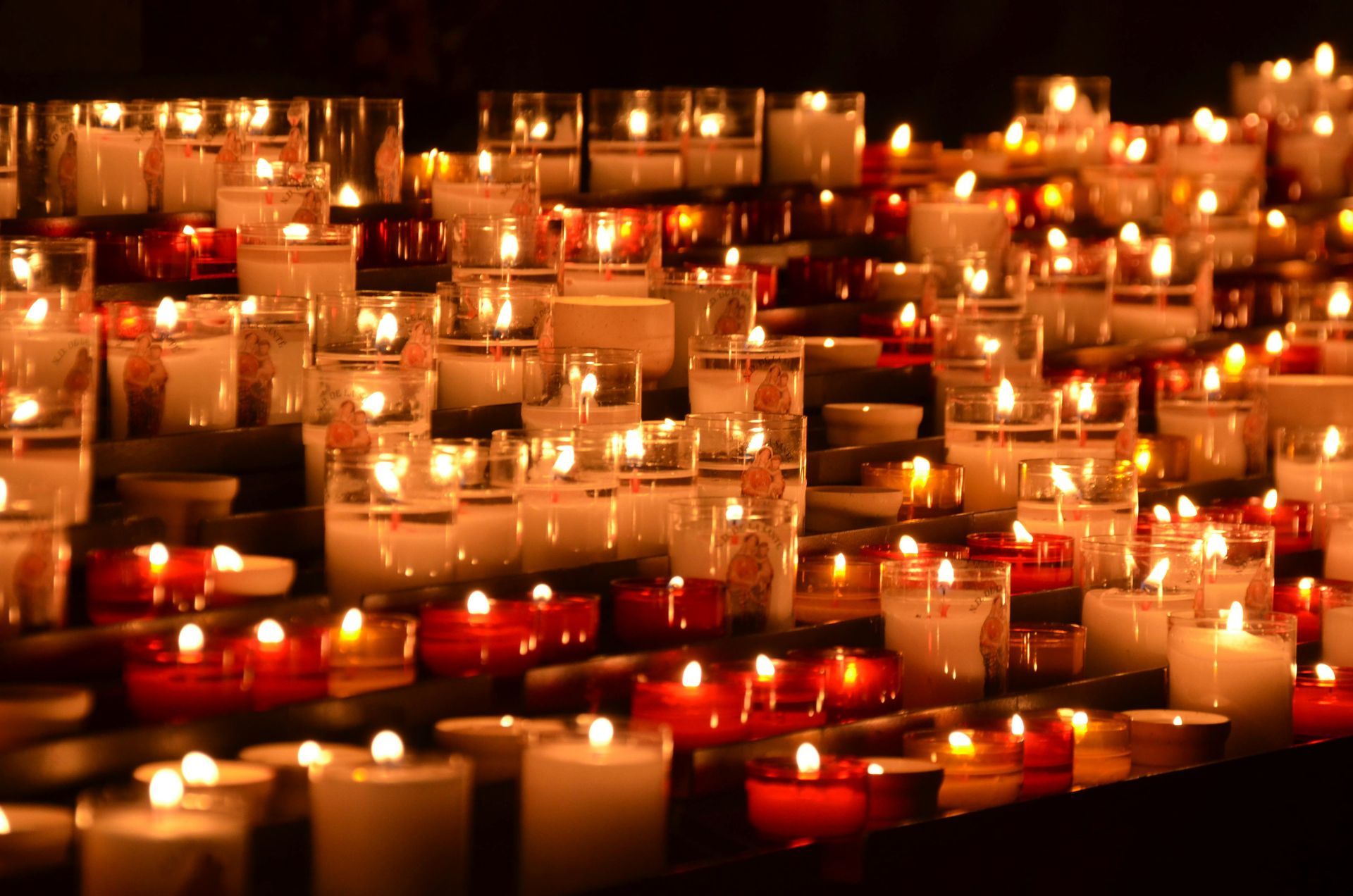
Our Lady’s Lamp - Intentions week commencing 25th January 2026 Blessed Sacrament Deceased Farrell Family RIP (SM) St Bride’s No intentions If you wish Our Lady’s Lamp to be lit for a loved one or an intention, please let us know. A donation of £5 is suggested and the candle will be lit all week in the church
By Webmaster January 11, 2026
This year's Crib Offerings will be shared between Aid to the Church in Need and projects helping homeless people within the Archdiocese. If you would like to donate electronically there is a QR code ,which you can scan next to the crib.
By Webmaster January 4, 2026
 Reflection for the Epiphany – Year A The Feast of the Epiphany celebrates the manifestation of Christ to the nations, symbolized by the visit of the Magi (Matthew 2:1–12). It is a moment of divine revelation — God’s light breaking into the world, not for a select few, but for all peoples. In Year A , the Gospel invites us to see ourselves in the Magi: seekers who journey through uncertainty, guided by a light they do not fully understand, yet compelled to follow. Their perseverance leads them not to a palace, but to a humble home — a reminder that God’s glory often appears in unexpected places. The Magi’s gifts — gold, frankincense, and myrrh — are more than treasures; they are acts of worship, acknowledging Jesus as King, God, and the One who will suffer for our salvation. Their encounter transforms them, sending them home “by another way,” symbolizing the change that true meeting with Christ brings. Reflection Points: • God’s light is for everyone — no one is excluded from His love. • The journey of faith requires trust, humility, and openness to surprise. True worship leads to transformation and a new way of living. Prayer: Lord Jesus, Light of the world, guide my steps as You guided the Magi. Help me to seek You with a sincere heart, to recognize You in the humble and unexpected, and to offer You the gift of my life. Amen.
By Webmaster January 4, 2026
The Solemnity of the Epiphany of the Lord is celebrated on Tuesday 6th January 2026 and is a Holy Day of Obligation. Masses as follows: Monday 5th January 26, Vigil Mass in St. Bride’s Church, Pontarddulais at 5pm;  Tuesday 6th January 26, Mass in Blessed Sacrament Church, Gorseinon at 9.30am.